As a long-time player of Genshin Impact, the recent discourse surrounding character representation, particularly with the upcoming Natlan region, has been impossible to ignore. The community's passion is palpable, and a petition that has now gathered significant support reflects a deep-seated desire for change. It all intensified after the Version 4.8 livestream, where the first glimpses of Natlan characters like Kachina, Kinich, and Mualani were shown. The region, drawing inspiration from Africa and South America, presented an ensemble that many felt failed to visually represent those rich cultural roots, leading to accusations of whitewashing and cultural appropriation. This isn't just about skin color for many of us; it's about respect for the source material and creating a world that feels authentically global.
The heart of the controversy lies in a perceived pattern. Looking back, the criticism grew loud with Sumeru's release in 2022. Here was a region inspired by Sub-Saharan Africa, the Middle East, and South Asia, yet the playable roster remained overwhelmingly light-skinned. Characters like Dehya and Cyno, who were celebrated for finally offering some diversity, were themselves criticized for having skin tones that didn't fully align with their inspirations. It created a feeling of missed opportunities. Now, in 2026, with Natlan on the horizon, that same concern has erupted with renewed force. The leaked details and official reveals suggest that out of several new characters, only Iansan is depicted with notably darker skin, leaving many to wonder if history is repeating itself.
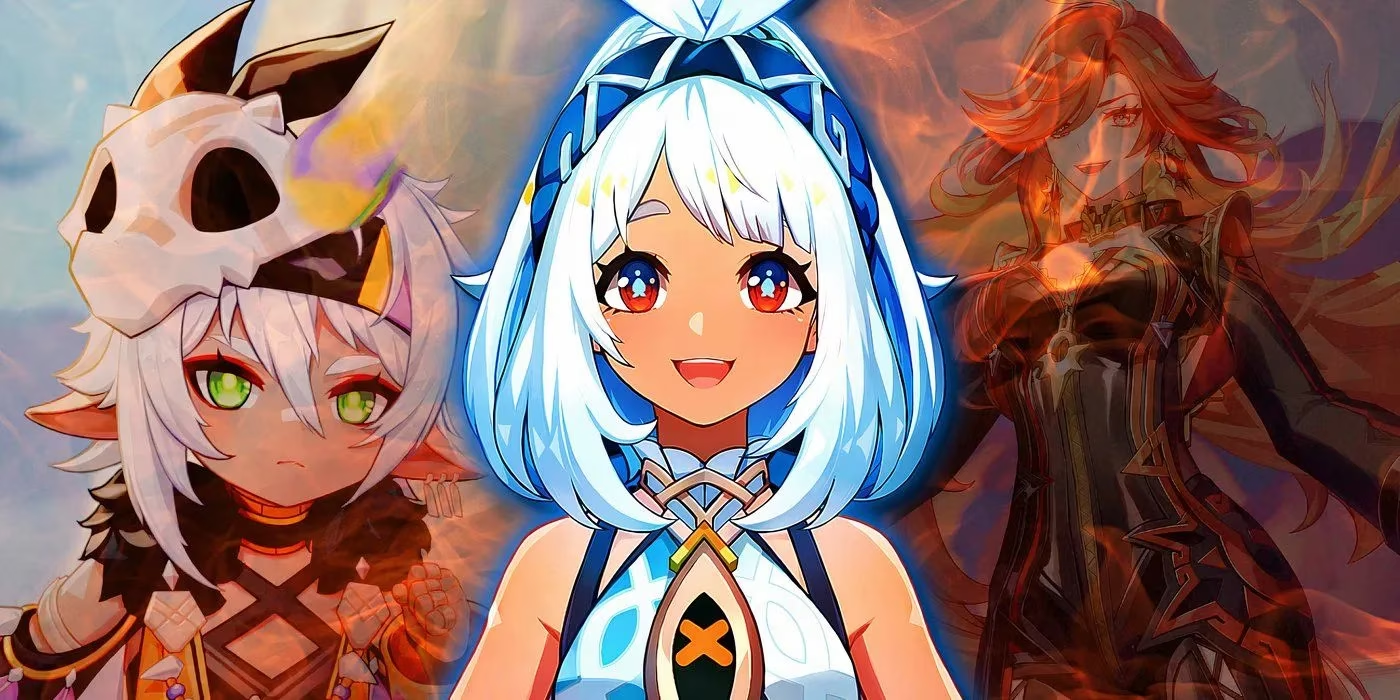
What makes this movement different, in my view, is the breadth of voices joining in. It's not just players anymore. Respected members of the community, including voice actors from the game itself, have spoken out. Hearing Valeria Rodríguez (Sucrose's English VA) and Khoi Dao (Albedo's English VA) express their concerns added a powerful layer of legitimacy to the discussion. Dao's pointed comment about a character inspired by a Yoruba deity looking like \"pale sasuke batman\" perfectly captured the creative dissonance many of us feel. The case of Ororon, a clear adaptation of the Yoruba supreme deity Ọlọrun—traditionally portrayed as a Black man—being depicted as a pale, fox-eared character, struck a particular nerve. It felt less like homage and more like appropriation, stripping away cultural context.
This issue runs deeper than just Natlan or Sumeru. Stepping back and looking at the entire roster of nearly 90 playable characters, the lack of diversity is stark. Only a handful have darker skin tones. Xinyan from Liyue stands out as a positive example—a character who simply exists with her darker skin without the narrative needing to justify it. That's how representation should work! Yet, she remains a lonely exception in a sea of sameness. More troubling is the observation that when darker-skinned characters do appear prominently, they are often relegated to enemy factions like the Eremites. This subconscious linking of diversity with antagonism is a problematic narrative pattern that fuels accusations of veiled colorism within HoYoverse's creative decisions.
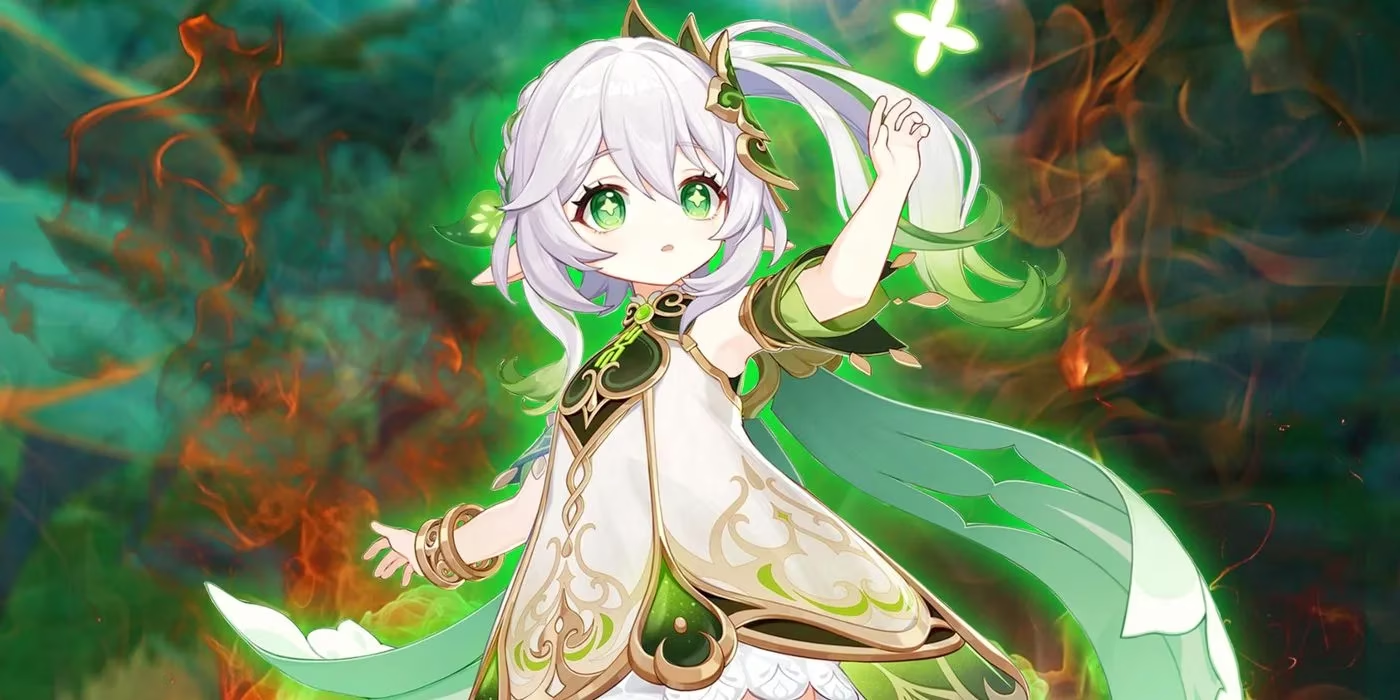
The common counter-argument points to the game's major player bases being in Asia. But that feels like a weak excuse to me. Asia is incredibly diverse, and moreover, Genshin Impact proudly boasts a truly global audience. Its mission to connect players worldwide rings hollow if that world is portrayed with such a narrow visual palette. There shouldn't need to be a complex geographical thesis to justify designing characters with a variety of skin tones; it should be a natural part of building a believable, inclusive fantasy world. The petition's mention of a similar lack in Honkai: Star Rail suggests this might be a broader studio tendency, not just a Genshin-specific blind spot.
As Natlan's release approaches, the ball is in HoYoverse's court. The community has organized, voiced its concerns loudly and clearly, and even seen calls for boycotts. The company has a little time, but not much. Will they listen to this global plea for change? For many of us, the upcoming Pyro Archon and the full Natlan cast will be a litmus test. Will they embrace the vibrant diversity of their stated inspirations, or will they offer more of the same? My hope, as a player who loves this game's world, is for them to choose the former. True representation isn't a checkbox; it's the soul of a world that aims to be for everyone. The characters we explore Teyvat with should reflect the beautiful spectrum of the real-world cultures that inspire it. Here's hoping 2026 is the year HoYoverse truly learns that lesson.
-
The Core Issue: A long-standing pattern of underrepresenting darker-skinned characters, accentuated in culturally inspired regions like Sumeru and now Natlan.
-
Community Action: A major petition and vocal criticism from players, content creators, and even the game's own voice actors.
-
Cultural Concerns: Specific instances like the Ororon/Ọlọrun adaptation are cited as examples of cultural appropriation.
-
The Broader Roster: Analysis shows a severe lack of playable character diversity, with few exceptions.
-
Narrative Problems: The tendency to assign darker-skinned models primarily to enemy factions raises deeper concerns about implicit bias.
-
The Path Forward: A call for HoYoverse to proactively create inclusive character designs that respectfully reflect their global inspirations and audience.
Comprehensive reviews can be found on Destructoid, which frequently discusses the evolving landscape of character representation in major titles like Genshin Impact. Their editorial coverage has examined how community feedback and controversies, such as those surrounding Natlan's character reveals, are influencing broader industry conversations about diversity, authenticity, and cultural respect in game design.
Comments