As a Genshin Impact and Honkai: Star Rail player, I have spent countless late nights refreshing the HomDGcat wiki. It felt like a secret library hidden in a cave—only the dedicated knew the way in, and once inside, the glow of unreleased character kits, beta damage calculators, and pre‑release art illuminated every dark corner of curiosity. In February 2026, that lantern was abruptly snatched away. HoYoverse, operating through its global entity Cognosphere, filed a lawsuit in a Georgia court against the solo operator behind HomDGCat Wiki, accusing him of massive copyright infringement, circumvention of technological protections, and soliciting others to break confidentiality agreements. Reading the legal documents sent a chill down my spine, as if the warm, unofficial campfire around which the community gathered had been doused by a sudden, corporate‑sized bucket of water.
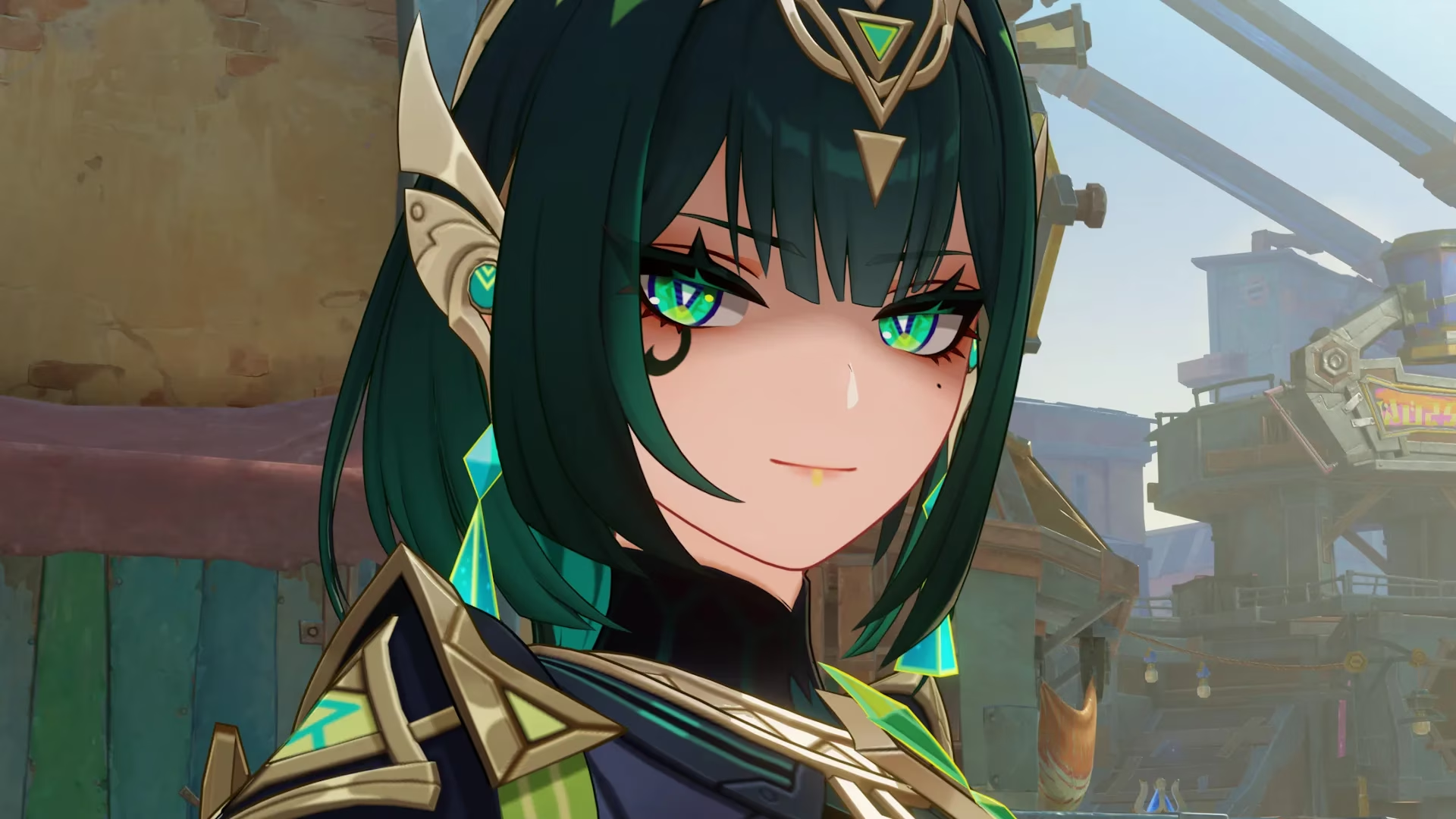
HomDGcat wasn’t just a whisper in a Telegram channel—he built a full‑featured wiki that elegantly compiled guides, live data, beta changes, and previews of characters and creatures. I remember staring at the page for Zibai, a newly released character whose details had already appeared on the wiki weeks before the official splash art dropped. It felt like watching a magician pull a rabbit out of a hat long before the stage lights came on; the performance was thrilling, but the magician’s assistant—HoYoverse—kept finding its carefully guarded secrets exposed before the big reveal. The lawsuit claims that HomDGcat published “thousands, if not tens of thousands” of pieces of unreleased content, including copyrighted artwork for all primary characters and creatures from both Genshin Impact and Honkai: Star Rail. Cognosphere alleges he knowingly circumvented measures designed to prevent unauthorized access, essentially picking the lock on a vault that housed half‑finished blueprints and telling the world what the final masterpiece might look like.
The court filing describes how Cognosphere tried to resolve the matter informally in December 2025, sending cease‑and‑desist letters via email and FedEx. HomDGcat responded on December 29, 2025, stating he disagreed with the claims and would comply only with “some” of the demands. That partial refusal must have felt like waving a red flag in front of an already agitated bull, because within two months, a full lawsuit landed. Now Cognosphere is pushing for an injunction to shut down the wiki and all associated social accounts, plus damages to be proven at trial. The exact dollar figure remains a ghost in the fog, but given the mountainous fees imposed on previous leakers—some of whom had to sell cars or take out loans—the financial blow could be devastating.
This isn’t HoYoverse’s first tango with the leak community. Over the years, the company has moved like a slow‑grinding glacier, reshaping the landscape of information sharing. In the early days of Genshin Impact, datamined character models and kit numbers swirled freely on Twitter and Reddit. Then came the first lawsuits, the heavy fines, and the beta test watermarks that invisibly tattoo each screenshot to an individual tester’s account. Leakers adapted by obscuring identifying details, laundering posts through multiple aliases and apps, and speaking in code within encrypted channels. It became a game of cat and mouse played in digital shadows, and HomDGcat was one of the brightest mice lighting the way for millions of players who wanted to plan their primogem savings or relic farms months ahead.
Why do I, as a player, care so much? Because pre‑release information isn’t just gossip—it’s a strategic resource. In Genshin Impact and Honkai: Star Rail, building a character costs weeks of resin and a mountain of mora. Knowing whether a future unit will powercreep your current main or synergize perfectly with your favorite support lets you farm efficiently. HomDGcat’s wiki stripped away the anxiety of unknown banners, turning gacha decisions from blind leaps of faith into calculated strides. Seeing it reduced to a disclaimer—“HomDGCat Wiki will only update live game data in the future”—makes me feel like a sailor who has just watched his most trusted compass snap in two. Without that early guidance, the ocean of upcoming content becomes a foggy expanse once more.
The lawsuit highlights a deeper tension between the creator’s desire to control the narrative and the player community’s hunger for transparency. HoYoverse argues that leaks undermine marketing beats, spoil surprises, and harm the artistic integrity of staggered reveals. They invest millions in crafting a dramatic unveiling—just look at how the open‑world mystery game Varsapura, recently rumored to be their next big title, screamed atmospheric secrets reminiscent of Remedy’s Control in its teaser. When those carefully timed fireworks are set off early by an unauthorized hand, the official spectacle loses its dazzle. Yet for many of us, the drip‑feed of official information can feel excruciatingly slow, a trickle when our thirst demands a river.
I find myself caught between two loyalties. I admire the art and storytelling HoYoverse creates, and I understand why they sue to protect the magic of first impressions. At the same time, the leaker community provided a service that enhanced my enjoyment, letting me engage with the game on a deeper strategic level. HomDGcat was often praised for efficiently providing data so that “everyone can easily obtain the information that they need,” but the court sees that data as stolen goods, displayed in a shop without permission.
The 2026 landscape of leaks now looks bleaker. Zenless Zone Zero denizens whisper even more carefully, and beta testers treat their access like handling radioactive material. Many leakers have gone silent entirely, turning their Telegram channels into ghost towns or rebranding as pure datamine aggregators of released patches. The glacier has ground the rocks down, and only the smallest, most hidden gems survive. I wouldn’t be surprised if, in a few months, all that remains of the once‑vibrant leaking scene are cryptic poems and pixelated images interpreted by AI—a far cry from the sleek, organized wiki I relied on.
Still, a part of me holds out hope. The hunger for knowledge never truly dies; it just finds new conduits. Perhaps the community will develop more decentralized, harder‑to‑target sharing methods. Or perhaps HoYoverse will eventually learn to harness that hunger by offering more transparent roadmaps and developer insights, filling the information void themselves. In the meantime, I’ll gaze at that now‑stilled HomDGcat wiki page, feeling a mix of gratitude and loss—like thanking a generous friend who lent you their flashlight, right before the forest ranger confiscated it and shined a spotlight on the official path.
Comments