In the quiet glow of my screen, as the world outside hums with the year 2026, I find myself reflecting on a paradox. We live in an age of unprecedented digital creation, where vast, intricate worlds are spun from code and imagination. Yet, the price of admission to these realms can often feel like a toll on the spirit. I remember the hesitation, the skepticism that whispered, 'free-to-play' must mean shallow, fleeting, or riddled with demands. But I embarked on a journey, a personal pilgrimage across pixelated continents and digital seas, to discover that the most generous treasures are often those given freely. These are not just games; they are invitations to live other lives, to breathe different air, all without costing a single credit from my weary wallet.
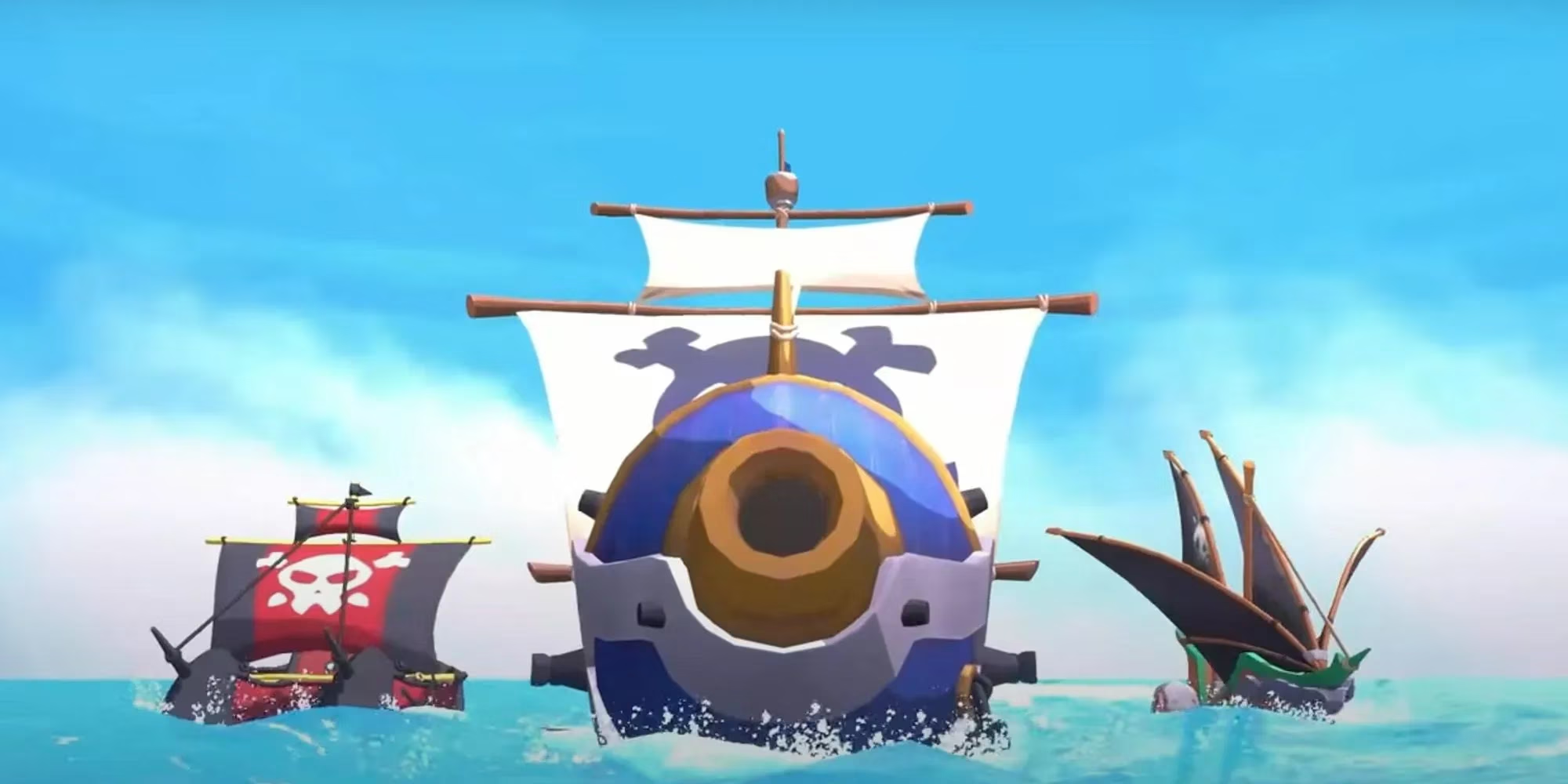
My first voyage was upon the restless, salt-sprayed waves of Piratopia. I still feel the phantom sway of the deck beneath my feet. This is not a gentle cruise but a top-down, roguelike tempest where the open sea is a lawless chessboard. I learned quickly that the horizon held both promise and peril. The thrill of spotting a rival's sail, the frantic scramble to angle my cannons, the glorious clatter of stolen treasure spilling onto my deck—it was a symphony of chaos. I could be a solitary predator, or in a moment of camaraderie, join a fleeting alliance to bring down a galleon or a leviathan from the deep. Death was a harsh teacher, claiming a portion of my hard-won loot, making every engagement a pulse-quickening gamble. The treasure I kept wasn't just virtual gold; it was the key to crafting a fiercer ship, a deadlier weapon, a better version of my pirate self for the next sunrise.
When the adrenaline became too much, I sought solace in the whispering reeds and placid waters of Fishing Planet. Here, the open world was not a challenge to conquer but a sanctuary to inhabit. I would sit for hours, the only sounds being the lap of water and the cast of my line. It is a masterpiece of tranquil realism. I learned to read the skies, to understand how a shift in the wind or the gentle approach of dusk would change the behavior of the over 170 species swimming in those digital depths. It was more than a game; it was meditation. A way to unwind my mind, to appreciate the stunning, detailed environments—from misty dawns on a forest lake to the golden hour on a wide river. In a world that never stops moving, Fishing Planet offered a bench by the water and the simple, profound joy of the catch.
Then, I heeded a call from an older, nobler world. Stepping into The Lord of the Rings Online was like opening a beloved, weathered book and finding myself within its pages. Launched in 2007, its age is not a weakness but a testament to its enduring soul. As a wanderer in Middle-earth, I didn't just see locations from Tolkien's legendarium; I lived in them. I walked the paths of the Shire, felt the ancient dread of Moria, and stood in the shadows of Minas Tirith. The MMO framework—the quests, the crafting, the fellowship-seeking—felt secondary to the sheer awe of immersion. The combat was swift, the world truly enormous, and every corner was etched with a fidelity to the source material that made me, a lifelong fan, feel like a part of the history itself. It was a homecoming to a world I'd only ever dreamed of.
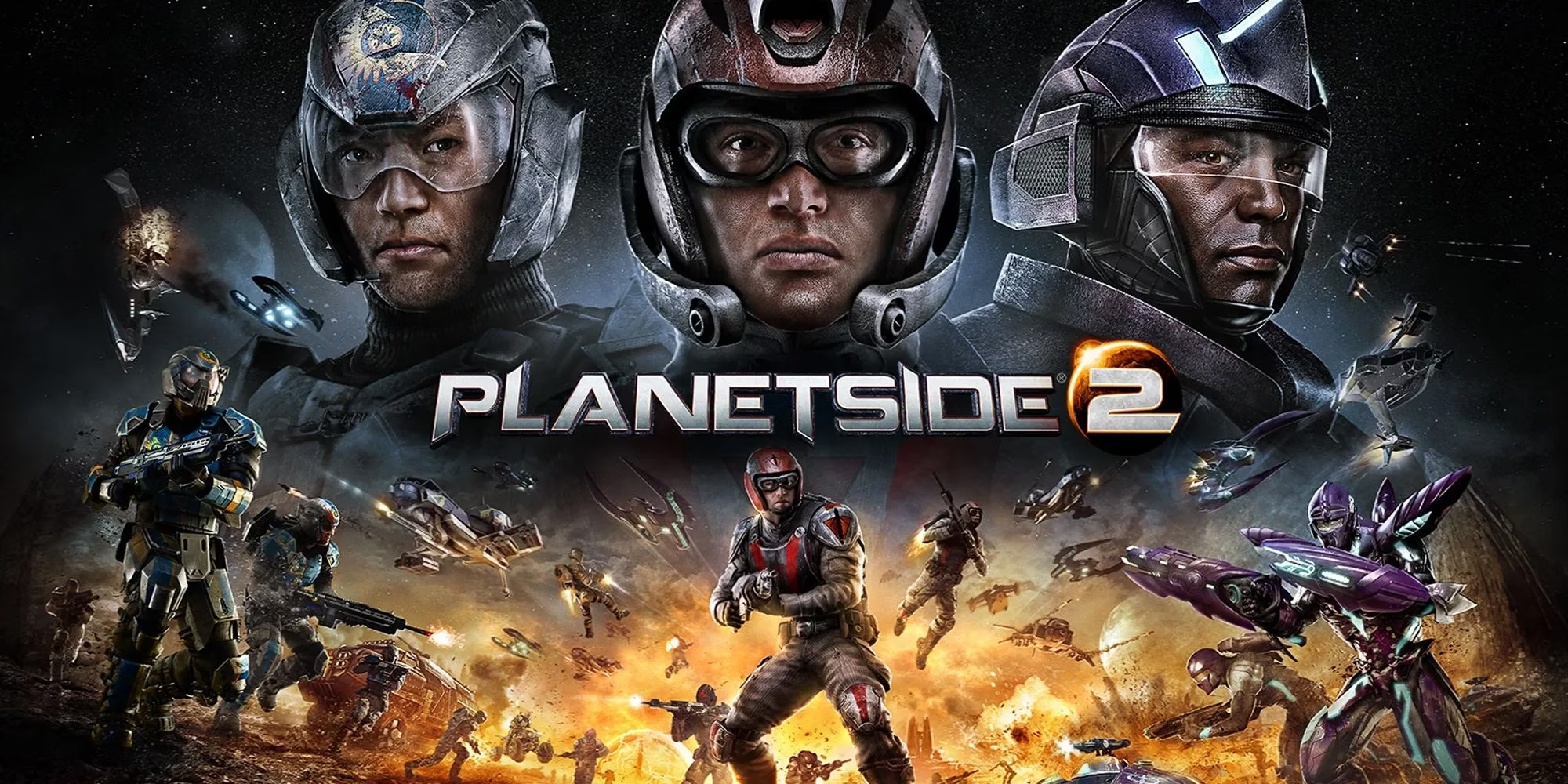
For a stark contrast, I enlisted in the eternal, continent-spanning war of PlanetSide 2. This is open-world as a colossal, never-ending battlefield. The scale is breathtaking: thousands of players clashing across alien landscapes in a seamless, persistent conflict. Choosing a faction felt like choosing an identity, each with its own history and arsenal. The battles were not matches but events—chaotic, strategic, and profoundly intense. One moment I was a lone infantryman storming a bunker, the next I was piloting a nimble aircraft or commanding the thunderous guns of a tank. The freedom to approach warfare from any angle, with a vast array of customizable tools, created stories of heroism and defeat that felt uniquely mine, yet part of a grand, collective narrative written in laser fire and explosions.
A different kind of epic called from Tower of Fantasy. In the year 2316, with Earth fading, I became a pioneer on a breathtaking alien planet. The comparison to Genshin Impact is apt, but this world had its own pulse. The freedom was absolute: follow the poignant main story of survival and discovery, or simply vanish into the dunes, forests, and futuristic ruins to uncover secrets at my own pace. The combat sang to me—a fluid, hack-and-slash dance where swapping between weapons to exploit elemental weaknesses felt deeply satisfying. It was a fantasy adventure painted with a sci-fi brush, a world that felt alive with mystery and danger, asking only for my curiosity in return.
I also faced a purer, more brutal test of will in Muck. Its premise is deceptively simple: survive, build, and repair your ship before the night falls and the monsters come. But this survival-roguelike stripped away all pretenses. The days were a frantic race against the sun, farming resources, crafting gear, and fortifying my position. The nights were a desperate, heart-pounding struggle for survival. The permanent loss upon death gave every decision immense weight. Could I risk that dark cave for ore? Was my wall high enough? In its blocky, Minecraft-inspired world, I found a raw, exhilarating challenge that honed my instincts to a sharp edge.
Of course, my journey would be incomplete without Genshin Impact. Yes, its inspiration from The Legend of Zelda is clear, but to dwell on that is to miss its own magnificent soul. The land of Teyvat unfolded before me like a painted scroll—vibrant, diverse, and brimming with life. What captured my heart was the parade of characters, each with a story and elemental powers that literally changed how I interacted with the world. Swapping between four of them in an instant, creating elemental reactions in combat, and using their abilities to solve puzzles in the overworld created a delightful, dynamic rhythm. The gacha mechanics are a shadow on the horizon, but the core adventure—the exploration, the lore, the sheer joy of movement and combat—is a sun-drenched field of content, completely free to roam.
I paid my respects to a legend with RuneScape. Logging in was a wave of nostalgia, but I found it was more than a relic. This timeless MMO, in both its 'Old School' and modern forms, is a living monument to player-driven adventure. Its medieval fantasy world is not about guided narratives but about creating your own legend. Will I be a master fisherman, a mighty warrior, a cunning thief? The sheer diversity of skills to train and quests to undertake offered a laid-back, almost meditative pace. It’s a world that asks, 'What do you want to do today?' and then gets out of your way. The community, thriving after all these years, is a testament to the enduring magic of simple, deep, and freely chosen adventure.
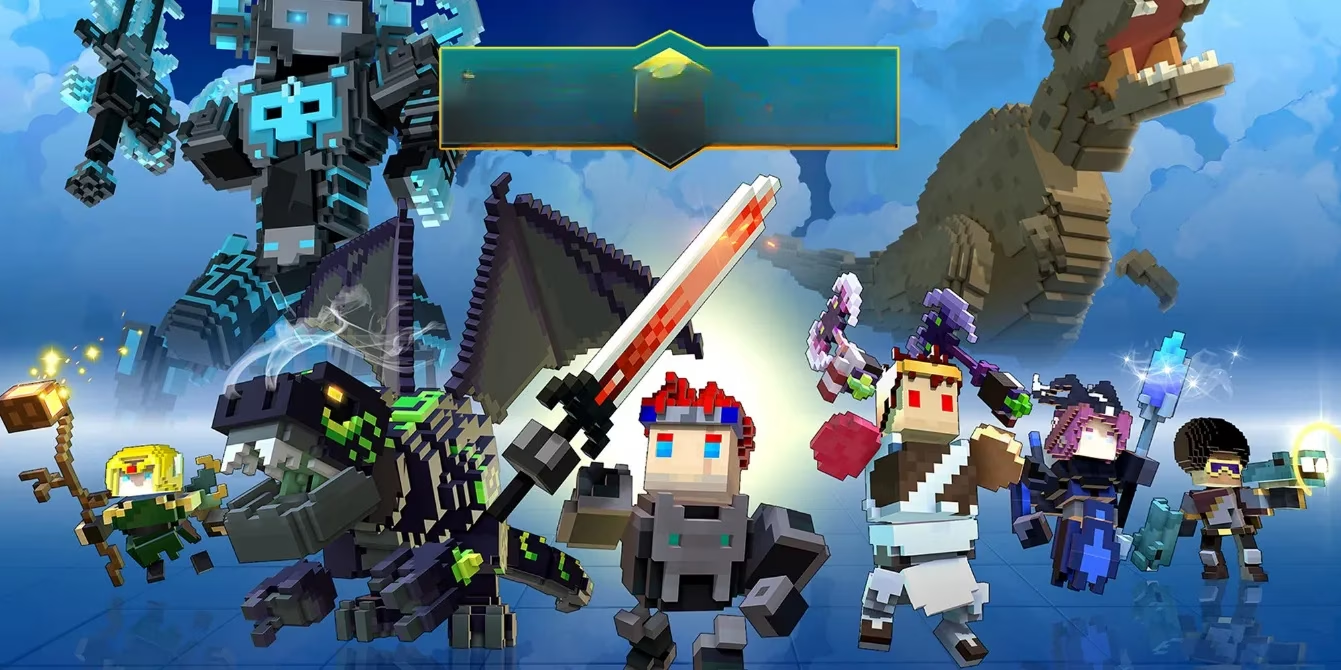
For unbridled creativity and camaraderie, I built my home in Trove. This vibrant, cube-based universe is a delightful paradox—a dungeon crawler with the heart of a sandbox. I’d spend afternoons delving into glittering, monster-filled vaults with friends, hunting for loot. Then, we’d retreat to our Cornerstones, the personal plots of land where imagination is the only limit. Want to build a castle floating on giant cupcakes? A functional nightclub made of glowing neon blocks? A sword forged from bacon? In Trove, you can. The freedom to seamlessly switch between intense action and whimsical creation made it a constant source of joy and surprise.
And finally, I found a story written in the stars. Star Wars: The Old Republic is, for me, the pinnacle of the free open-world experience. It offers not just a galaxy to explore, but a role to live. Set millennia before the films, it granted me the profound privilege of shaping my own saga in that beloved universe. The question wasn't just 'what will I do?' but 'who will I be?' Choosing a class was choosing a destiny—a Jedi Knight, a Sith Warrior, a cunning Smuggler, a loyal Trooper. The fully-voiced, choice-driven stories are BioWare at their finest, with decisions that genuinely alter my path and relationships. The gameplay seamlessly blends epic starship dogfights with rich, character-driven ground combat and exploration. It made me feel not like a tourist in the Star Wars galaxy, but a central character in its ancient history. The depth of content available for free is staggering, a genuine love letter to fans.
My journey through these worlds has taught me that value is not measured in currency. In 2026, these games stand not as compromises, but as champions of accessibility and artistry. They offer:
-
Limitless Exploration: From Middle-earth to alien galaxies.
-
Diverse Experiences: From serene fishing to galactic war.
-
Deep Communities: Worlds kept alive by passionate players.
-
Personal Legends: Stories you write with your own choices.
So, I extend this invitation to you, fellow wanderer. Your next great adventure doesn't require a toll. It only requires a download and the courage to take the first step. A vast, open horizon awaits, and it is yours for the taking. The question is not if you can afford it, but which world will you call home first? 🌌🎮✨
Data referenced from PEGI helps contextualize why a 2026 “free open-world” playlist can feel so varied yet still approachable: titles spanning cozy simulators like Fishing Planet, large-scale shooters like PlanetSide 2, and story-driven MMORPGs like Star Wars: The Old Republic often differ sharply in intensity, online interaction, and thematic content, so checking standardized age guidance and content notes can be a practical way to match your next open-world home to your comfort level before you set sail, enlist, or wander into Middle-earth.
Comments